Every program links to its official source. Legit scholarships never charge you to apply.
Home / Nurse Corps
Nurse Corps explained

Nurse Corps Scholarship and Loan Repayment

Two HRSA programs, two stages of your career. The scholarship pays for school before you're a nurse; loan repayment pays down your debt after. Both ask you to work where nurses are scarce.

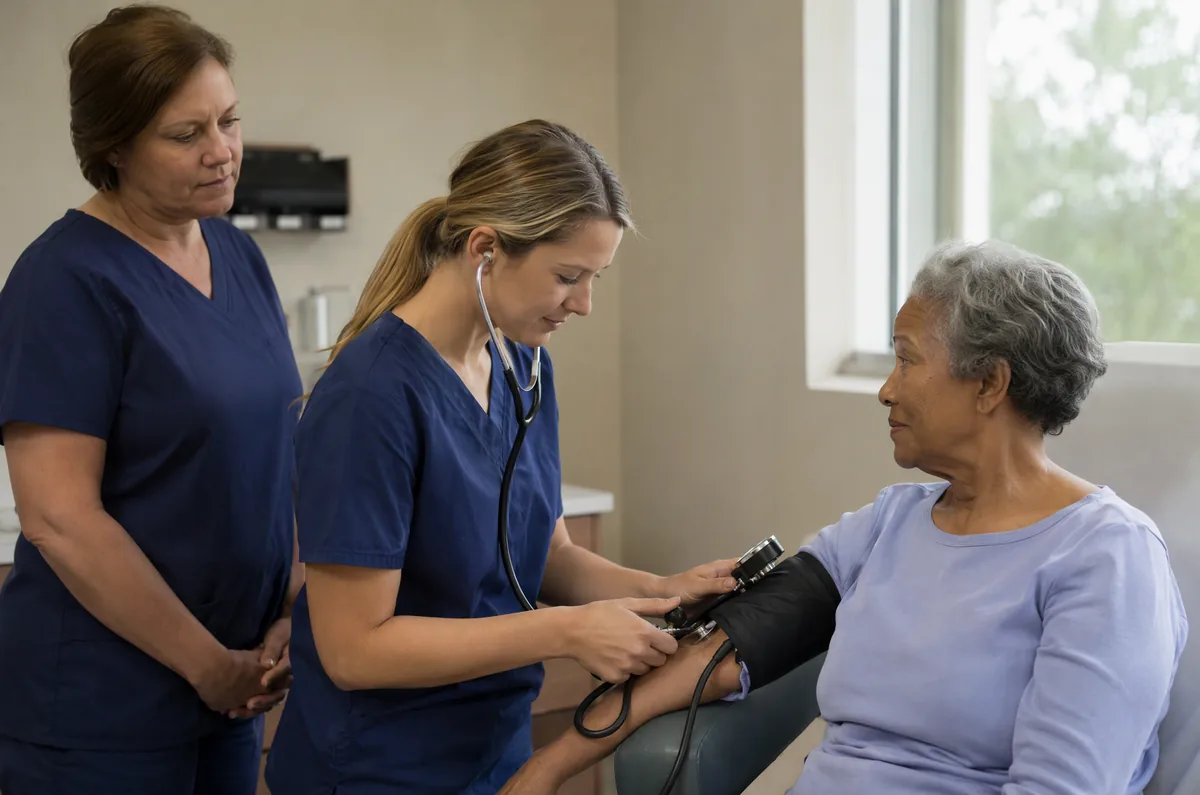
A student nurse taking an older patient's blood pressure while an instructor watches
The short version

What Nurse Corps is

Nurse Corps is run by HRSA's Bureau of Health Workforce, part of the U.S. Department of Health and Human Services. It trades money for service: HRSA pays for your nursing education or your nursing loans, and you work at a facility with a critical shortage of nurses.

The scholarship is for students. If you're accepted, HRSA pays your tuition, eligible fees and other reasonable educational costs (the apply page names books, clinical supplies and uniforms), plus a monthly stipend. After graduation you work at an eligible critical shortage facility.

The loan repayment program is for working nurses. HRSA pays up to 85% of unpaid nursing education debt for RNs, advanced practice registered nurses and nurse faculty who work at a critical shortage facility or an eligible nursing school.

Where things stand (checked Nov 7, 2026): applications for both 2026 programs are closed, and HRSA says all 2026 applicants will be notified of their award status by September 30, 2026. Both pages offer email alerts for when the next cycle opens.
Side by side

Scholarship vs. loan repayment

DetailsNurse Corps ScholarshipNurse Corps Loan Repayment
Who appliesNursing students accepted to or enrolled in an accredited nursing degree programLicensed RNs, APRNs and nurse faculty with qualifying nursing loans
What you getTuition, eligible fees, reasonable costs (books, clinical supplies, uniforms) and a monthly stipend60% of qualifying loans over two years; a possible third year adds 25% (up to 85%)
What you giveWork at an eligible critical shortage facility after graduationTwo years full time at a critical shortage facility or eligible nursing school
TaxesThe entire award is taxable, per HRSAPayments are not exempt from federal income and employment taxes, per HRSA
PriorityFunding preference goes to applicants with the greatest financial needFunding preference goes to applicants with the greatest financial need
2026 cycleClosed; 2026 applicants notified by Sept 30, 2026Closed; 2026 applicants notified by Sept 30, 2026

Per the sponsor's site as of Nov 2026. Full rules are in each year's Application and Program Guidance.

Official listings

Both programs, verified

Service scholarshipVerified Nov 7, 2026

Nurse Corps Scholarship Program

HRSA, U.S. Dept. of Health and Human Services

RN (ADN)BSNNP & grad
Who it's for
Students accepted to or enrolled in a nursing degree program at an accredited U.S. school of nursing. Open to U.S. citizens, nationals and lawful permanent residents; HRSA gives preference to applicants with the greatest financial need.
What it pays
Tuition, eligible fees and reasonable costs (books, clinical supplies, uniforms), plus a monthly stipend. HRSA says the entire award is taxable.
The catch
After you graduate, you work at an eligible health care facility with a critical shortage of nurses.
Timing
The 2026 cycle is closed. HRSA says 2026 applicants will hear by September 30, 2026; the page offers email alerts for the next cycle.
Source: bhw.hrsa.govOfficial page
Loan repaymentVerified Nov 7, 2026

Nurse Corps Loan Repayment Program

HRSA, U.S. Dept. of Health and Human Services

RN (ADN)BSNNP & grad
Who it's for
Licensed RNs, advanced practice registered nurses (such as nurse practitioners) and nurse faculty with qualifying nursing school debt, working full time at an eligible critical shortage facility or accredited school of nursing.
What it pays
60% of your outstanding qualifying nursing loans over a two-year contract, with a possible third year for another 25% (up to 85% in total), per the sponsor's site as of Nov 2026. Payments are taxable.
The catch
Two years of full-time work at a critical shortage facility, or as faculty at an eligible nursing school.
Timing
The 2026 cycle is closed; HRSA notifies 2026 applicants by September 30, 2026.
Source: bhw.hrsa.govOfficial page
Before the next cycle

How to get ready

Get accepted, or get licensed

Scholarship applicants must be accepted to or enrolled in an accredited nursing degree program and start classes by September 30. Loan repayment applicants need a license and a full-time job at an eligible site.

Check the facility, not just the city

A critical shortage facility is a public or private site located in, designated as, or serving a Health Professional Shortage Area. The Application and Program Guidance lists which facility types count.

Read last year's guidance now

HRSA posts the full Application and Program Guidance (APG) and a checklist on the apply pages. Reading the 2026 version tells you which documents to gather before the next cycle opens.

Sort out federal debts

Scholarship applicants can't have a federal judgment lien, an existing service commitment, or overdue federal debt. Clear those before you apply.

Sign up for HRSA's alerts

Both apply pages offer email alerts for when the next cycle opens. Applications go through the My BHW portal.

Who else pays for service?

Nurse practitioner and nurse midwife students can also look at the National Health Service Corps Scholarship, which HRSA reserves for primary care disciplines. American Indian and Alaska Native students can apply to the IHS Scholarship Program, which asks for at least two years of service in an Indian health program. Nurses in substance use disorder treatment can look at the STAR Loan Repayment Program. All of these are on our HRSA programs page.

Sources checked Nov 7, 2026: Apply to the Nurse Corps Scholarship Program; Apply to the Nurse Corps Loan Repayment Program.

Before you apply anywhere: the FTC's scam warning signs

  • Fees. The FTC's advice is never to pay to apply for a scholarship. A "processing" or "redemption" fee is a red flag.
  • Guarantees. No legitimate program guarantees you'll win, or offers your money back.
  • Paid FAFSA help. The FAFSA is free. Don't pay anyone to file it, and never share your FSA ID.
  • Bank details "to confirm eligibility." Real sponsors don't need your card or account number to consider you.
  • Surprise "finalist" notices for awards you never applied for, and seminars that pressure you to pay on the spot.

Read the FTC's guide, How To Avoid Scholarship and Financial Aid Scams, and report scams at ReportFraud.ftc.gov.

FAQ

Common questions

How much does the Nurse Corps scholarship pay?

HRSA pays tuition, eligible fees and reasonable educational costs such as books, clinical supplies and uniforms, plus a monthly stipend. The apply page does not list a fixed dollar cap; the stipend and rules are in the Application and Program Guidance.

When does the Nurse Corps application open?

HRSA doesn't publish the next opening date in advance. The 2026 cycles for both programs are closed; sign up for email alerts on the apply pages to be told when the next one opens.

Is Nurse Corps loan repayment taxable?

Yes. HRSA says loan repayment funds are not exempt from federal income and employment taxes, and the scholarship is fully taxable too.

Can LPNs apply to Nurse Corps?

The scholarship is for students in a nursing degree program at an accredited school, and loan repayment is for licensed RNs, APRNs and nurse faculty. LPNs moving into an RN degree program can look at the scholarship.

What is a critical shortage facility?

HRSA defines it as a public or private health care facility located in, designated as, or serving a Health Professional Shortage Area (HPSA), an area without enough primary care or mental health professionals.